A Supper Built Around the First Autumn Squash
Plan an autumn squash supper around the squash you have, with clear ways to balance its sweetness, choose useful textures and adapt the rest of the menu.
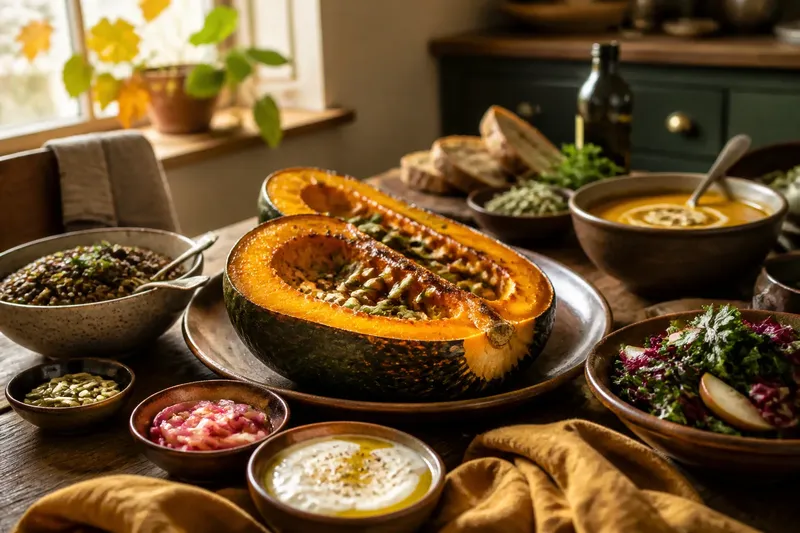
The first squash from the market sits on the kitchen table while you decide what else to serve. A squash-led autumn supper is easier to plan if you begin with that particular squash, then choose a contrast and a companion from what is already in the kitchen. The aim is not to build a fixed menu around a fashionable ingredient; it is to give the squash a clear place at the table.
Let the squash set the pace
Squash differs in sweetness, moisture and texture. A firm, dense variety such as kabocha or butternut can hold its shape in wedges or chunks. A more watery squash may suit a purée, soup or soft filling better. The peel is edible on some varieties once cooked, while others are more pleasant peeled. Check the variety and the grower or shop’s guidance if you are unsure.
Before deciding on other dishes, cut a small piece and taste it raw if appropriate for the variety, or cook a small portion in a familiar way. Notice whether its flavour seems nutty, earthy, mild or distinctly sweet. This is not a test to pass; it is a useful cue. A naturally sweet squash may welcome a sharp dressing, while a mild one can take a more assertive spice or savoury topping.
Think of the squash as the centre of a place setting, not as a dish that must occupy every corner of the menu. Like a chair at a table, it needs room around it to be useful. If the squash is roasted with a rich glaze, a second sweet or creamy dish may crowd the meal. If it is served simply, a more vivid accompaniment can give the plate definition.
Choose your supper situation
If the squash is the main event
Make it substantial with a protein-rich or grain-based partner. Lentils, chickpeas, butter beans, barley, rice or a baked egg can help turn roasted squash into a complete-feeling meal. The pairing need not be elaborate: a bowl of warm lentils dressed with vinegar and herbs can sit beside plain squash without competing for attention.
This approach fits a large squash or one with a flavour worth lingering over. Keep the cooking method straightforward and let a contrasting topping do the finishing work: toasted seeds for crunch, chopped parsley for freshness, or a spoonful of yoghurt for coolness. If the squash is especially sweet, use a salty or tangy finish rather than adding more syrup or honey.
If the squash is one course among several
Give it a smaller role and avoid making every other dish equally rich. Squash soup can begin a supper that later includes bread, cheese or a substantial main. Roasted wedges can sit alongside a green vegetable and a simple grain. A dish that is vivid but modest in size may be more welcome than a tray of squash plus several competing centrepieces.
This is a good fit when guests are bringing food or when the kitchen already contains a main dish. Ask what is already planned, then decide whether your squash should be a side, a salad element or a first course. That choice prevents duplicate starches and gives the menu a more natural rhythm.
If the kitchen supplies the menu
Start with what needs using: a tub of yoghurt, a half-used bag of spinach, a lemon, stale bread, cooked rice or a jar of beans. Choose the squash preparation that makes those ingredients useful. For example, spinach can go into a warm grain bowl, while stale bread can become crisp crumbs for a soft squash soup.
This situation suits a household meal where flexibility matters more than a matching set of dishes. Avoid buying several extra ingredients to complete an imagined recipe. A few well-chosen elements—something fresh, something crisp and something filling—can make a coherent supper from ordinary provisions.
Balance sweet with sharp
Squash’s sweetness is often pleasant, but a whole menu of soft, mellow flavours can feel heavy. Bring in acidity with lemon juice, cider vinegar, pickled onions or a spoonful of sharp chutney. Add bitterness with chicory, radicchio or dark leafy greens. A little heat from chilli, black pepper or mustard can also sharpen the flavour without turning the meal into a spicy one.
Use these contrasts with care. A tart dressing on a green salad may be enough; the squash itself does not need a sour glaze as well. If serving a chutney or pickle, offer it at the table so people can add the amount they like. The point is to make sweetness more distinct, not to hide it.
Salt can help savoury flavours register, especially in beans, grains and roasted vegetables. Taste each component before serving and season it on its own terms. A salty cheese, miso dressing or brined olive may already supply enough; adding salt automatically to every dish can make the meal blunt.
Give the plate contrasting textures
Cooked squash is often tender, so include something crisp or chewy. Toasted pumpkin seeds, walnuts, crisp breadcrumbs, fried sage leaves or a handful of raw leaves can provide contrast. For a softer supper, use a chewy grain such as barley or farro. For a lighter plate, pair squash with a crisp salad of apple, celery or cabbage.
Choose one principal texture contrast rather than adding every crunchy item in the cupboard. If the squash has been roasted until its edges are browned, it already has some firmness and concentrated flavour. A creamy dressing may then be more useful than another toasted topping. If it is mashed or puréed, a crisp garnish becomes more noticeable.
Keep delicate additions separate until serving. Seeds and breadcrumbs lose their crispness if left sitting on soup or dressed vegetables. A small bowl on the table is an easy way to preserve texture and let diners add their own.
Match the cooking method
Roasting is suited to firm squash when you want browned edges and pieces that can be served whole. Cut pieces to a similar size, coat them lightly with oil, season, and roast until tender, turning if needed for even colouring. The exact time depends on the variety, cut and oven, so judge by softness and colour rather than relying on a fixed schedule.
For a soup or purée, simmer squash with onion, stock or water until tender, then blend. Add liquid gradually so the result stays thick enough to carry toppings. A little coconut milk, cream or yoghurt can soften the flavour; lemon or vinegar can bring it back into focus. Keep the additions modest at first, since it is easier to adjust a bowl than to correct a whole pot.
For a quick pan-cooked dish, use small pieces that can become tender without scorching. This works well with a firm variety and a lid, but can be less suitable for squash that turns watery. If the pieces begin to soften before their surfaces colour, stop chasing browning and use them in a grain bowl or filling instead.
What fits your table?
Can squash be the whole main course?
Yes, if the meal includes something filling alongside it, such as beans, lentils, grains or bread. A generous serving of squash alone may feel incomplete, so add protein and a contrasting texture rather than relying on size alone.
Which flavours work with autumn squash?
Sage, thyme, cumin, coriander, chilli, black pepper, garlic and browned butter can all suit squash, but the best choice depends on its sweetness and the rest of the meal. Use one clear flavour direction, then add acidity or herbs to keep the dish from tasting flat.
What if the squash is bland?
Season the cooked squash with salt, a little acid and a more pronounced savoury element such as garlic, miso, cheese or toasted spices. Pairing it with a well-seasoned bean or grain dish can also give a mild squash a useful supporting role.
Can I prepare the meal in advance?
Cook sturdy components ahead, such as roasted squash, cooked grains or a bean dish, and keep crisp toppings and fresh herbs separate. Reheat the cooked food until hot, then add the finishing elements just before serving so their flavour and texture remain distinct.
Build from what is on hand
Imagine you have a butternut squash, cooked chickpeas, half a lemon, a bag of spinach and a little yoghurt. Roast the squash with oil, salt and cumin; warm the chickpeas with garlic; wilt the spinach briefly; and stir lemon juice into the yoghurt. The expected result is a plate with sweet, tender squash, filling beans, soft greens and a cool, sharp sauce, without needing a separate elaborate side.
For another cupboard, the same planning logic changes the menu. If you have rice and frozen peas rather than chickpeas and spinach, serve the squash over rice, fold peas into the warm grains and finish with chilli and vinegar. The principle is not to reproduce a prescribed recipe, but to select one filling element, one contrast and one finishing flavour.
When choosing among autumn squash supper ideas, begin with the squash’s texture and the ingredients already available. Decide whether it is the centre or a supporting dish, then add only the contrasts the meal lacks: sharpness, freshness, crunch or substance. That small decision makes the first squash of the season feel at home at an ordinary table.