The Mise en Place Myth: Every Meal Need Not Be Laid Out
Mise en place need not mean laying out every ingredient. Learn what to prep early, what can wait and how to keep a home supper flexible.
At half past six, a chopping board is crowded with bowls while a pan waits cold on the hob. Mise en place—the practice of preparing ingredients before cooking—can make a meal easier to manage, but it need not mean measuring and arranging everything in advance. The useful question is not “Have I laid it all out?” but “What could interrupt the next few minutes of cooking?”
That distinction matters in a home kitchen, where dinner often shares space with a school bag, a cooling mug of tea or a late change of plan. Preparation should clear the moments that need attention, not turn the counter into a display. Imagine one ordinary supper and follow what deserves to be done early, what can wait, and why.
A shifting dinner plan
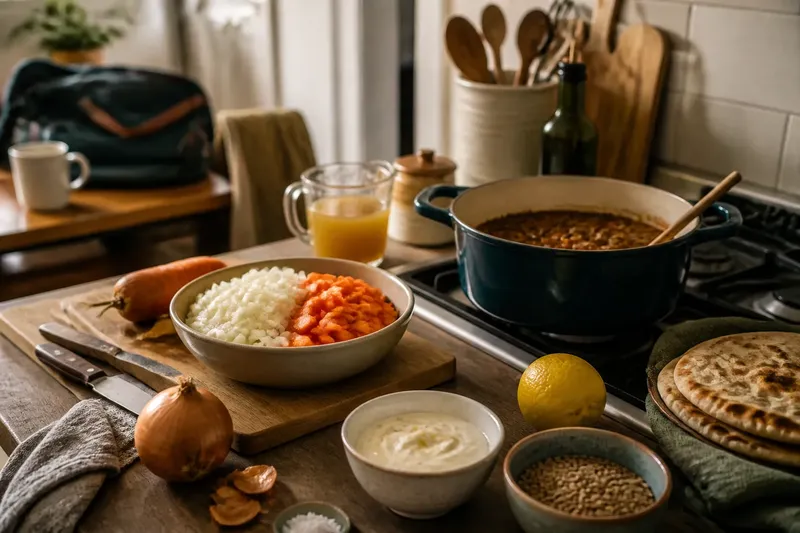
Say you have lentils, a carrot, an onion, a lemon, yoghurt and flatbreads, and intend to make a warm lentil supper. This is an invented situation, not a report of an actual meal. The lentils need simmering, the onion and carrot will flavour them, and the yoghurt and lemon can become a cool dressing. You expect to eat soon, but you may need to answer the door or step away briefly.
A rigid version of mise en place would invite you to measure every ingredient into separate bowls, zest and juice the lemon, chop all the vegetables, mix the dressing and lay out the flatbreads before lighting the hob. Some of that work is useful; some creates extra washing-up and commits the meal to a sequence before you know how the evening will unfold.
Instead, pause over the recipe or your own plan and mark the points where the pan will need you. The first is the start: onion and carrot should be ready before they go into the pot. The next is when the lentils begin to simmer. After that, there is a stretch of time in which you can prepare the dressing or set the table. This is a kitchen rhythm, not a demand to finish every task before cooking begins.
Prepare the interruption points
For this supper, peel and chop the onion and carrot before heating the pot. They are the ingredients most likely to need quick, continuous attention at the start. Put them together in one bowl if they will enter the pan at the same time; separate them only if the recipe calls for them at different moments. A single bowl can be as useful as a neat row of ramekins.
Check the lentils and have the stock or water ready to add. This is a small but valuable pause point: once the vegetables are softening, you will not need to rummage through a cupboard or search for a measuring jug. Keep the pot, spoon and chosen cooking liquid within reach. You have prepared the hand-off between one task and the next, rather than staged the entire meal.
Leave the lemon whole and the yoghurt in its container for now. The dressing can be mixed while the lentils simmer, and the lemon is easier to squeeze when you are ready to use it. If you are unsure how much seasoning or acidity the pot will need, waiting lets you taste first. Preparation can preserve choices as well as save time.
Use the simmering gap
Once the lentils are simmering, the pot asks for less constant attention. Use that quieter interval to stir yoghurt with lemon juice and a little salt, then taste it. Put the flatbreads on the table or warm them when the timing suits your meal. If the pot needs frequent stirring, keep the dressing ingredients close and do only the parts that can be paused safely.
The difference is much like setting out a book and a pencil before a lesson, rather than arranging every page you might use. You make the next action easy without pretending you already know exactly how the whole session will go. In the kitchen, that means preparing a bottleneck—the point where a missing ingredient or tool would stall cooking—while leaving later decisions open.
Suppose, in this invented supper, a phone call delays serving. Because the lemon is still whole and the dressing is not yet committed to the lentils, you can keep the components apart and finish when you return. If the lentils thicken while waiting, add a little cooking liquid and taste again. The visible result to expect is a meal that can pause and resume without the prepared components becoming an obstacle.
Choose what can wait
Not every ingredient behaves the same way while it waits. Chopped onion and carrot can sit briefly while you prepare the pot, but delicate herbs are better chopped near serving so they do not wilt on the board. A sauce that needs resting may benefit from being mixed early; a crisp garnish may lose its texture if it sits. Let the recipe’s sequence and the ingredient’s condition guide the decision.
Use bowls selectively. They help when ingredients enter together, when a quantity needs to be held apart, or when a small item might otherwise be overlooked. They are less helpful when they merely transfer food from its original container and create another dish to wash. A plate, a mug or a small patch of board can hold a modest ingredient just as well.
There is also no need to measure every seasoning before cooking. Measure ingredients whose proportions shape the dish, especially when the method depends on a particular balance. Keep flexible additions, such as lemon, herbs or extra salt, available for tasting later. For package directions, food-safety questions or special dietary needs, follow the relevant label or seek qualified advice where appropriate.
What should be ready first?
What does mise en place mean at home?
It means arranging the preparation that makes cooking manageable, not necessarily portioning every ingredient into separate bowls. At home, the useful version is the one that fits your recipe, space and attention.
Should every ingredient be measured beforehand?
Measure ingredients when their proportions matter to the result or when a later pause would be awkward. Leave adaptable additions, such as herbs and citrus, until you can taste the dish.
What can I prepare while food simmers?
Use a quieter cooking interval for tasks that can be interrupted, such as mixing a dressing, setting the table or washing a knife. Stay close enough to tend the pot as its recipe requires.
How can I reduce prep dishes?
Group ingredients that enter together and use the board or an existing container when it is clean and suitable. Reserve separate bowls for ingredients that need distinct timing or must stay apart.
A flexible kitchen rhythm
In the lentil supper, the decisive preparation was modest: chop the vegetables, ready the cooking liquid and keep the pot’s first moves uninterrupted. The dressing, lemon and flatbreads could wait for a natural gap. That is the central lesson of mise en place: prepare for the moment that needs your hands, then let the rest of the meal take shape at its own pace.
Before your next supper, scan the first few actions and ask what would make you stop midway. Set out only what answers that question. The counter stays clearer, the washing-up stays smaller, and you retain room to taste, adjust or pause when the evening asks for it.