Fresh, Frozen or Tinned Tomatoes for the Pot?
Choose fresh, frozen or tinned tomatoes for the pot by matching their texture, convenience and flavour to the dish you plan to cook.
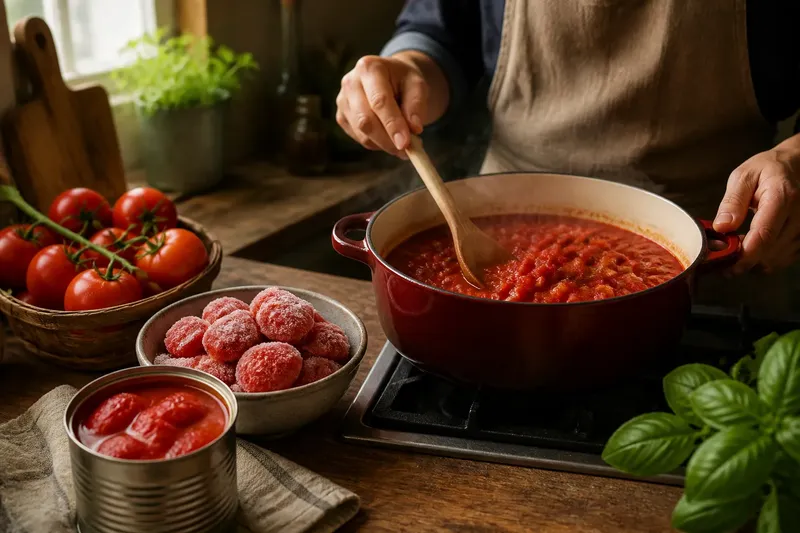
You have a saucepan ready for soup, and three tomato options on the counter: a punnet of fresh fruit, a bag in the freezer and a tin in the cupboard. Choosing among fresh, frozen or tinned tomatoes is less about finding one best form than matching each to the texture and timing your dish needs.
Start with the finished dish in mind. Tomatoes behave differently according to how they are preserved and how much water they release; those differences affect whether they remain distinct, collapse into a sauce or need time to cook down. A simple decision made before heating the pan can spare you from compensating for the wrong texture later.
Choose the finished texture
Ask whether you want pieces of tomato to hold their shape, a soft base with some texture, or a smooth, concentrated sauce. This is the most useful first distinction because fresh, frozen and tinned tomatoes do not enter the pot in the same condition.
Fresh tomatoes vary considerably with their type and ripeness. Firm, ripe fruit can be cut into pieces for a quick vegetable stew or folded into a dish near the end, where it softens but may retain some shape. Very ripe tomatoes tend to release more juice and break down sooner. If a recipe depends on a thick, steady sauce, that variability may mean a longer simmer.
Freezing ruptures the tomato’s structure, so thawed fruit usually becomes soft and releases liquid. Frozen tomatoes suit soups, stews and sauces where the pieces are expected to collapse rather than stay neat. They are a poor match for a raw salad or a dish that depends on firm tomato slices.
Tinned tomatoes are already peeled and softened by processing. Chopped tomatoes offer pieces, while whole peeled tomatoes can be crushed by hand or with a spoon in the pan. Either can make a reliable base for a cooked sauce, though brands and varieties differ in thickness and flavour.
Match the form to the dish
For a short-cooked dish, fresh tomatoes are often the natural choice. A pan of eggs with tomato, a quick fish stew or a vegetable sauté can make good use of fresh fruit, particularly when you want its flavour to remain bright rather than becoming the whole sauce. Add it at a point that suits the recipe: earlier for a softer result, later when a little shape is welcome.
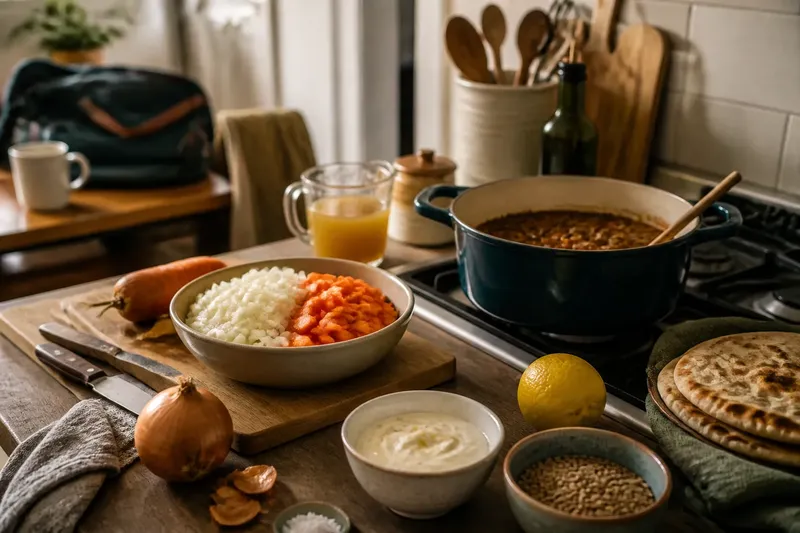
For a long simmer, tinned tomatoes are convenient because they are ready to use and begin softening as soon as they heat. They work well in lentil soup, pasta sauce and braised beans, where an even tomato base is more useful than crisp pieces. Whole peeled tomatoes are handy if you want control over the final texture; chopped tomatoes are convenient when an even spread of pieces is enough.
Frozen tomatoes fit dishes that already involve cooking the fruit down. They can go into a soup or stew from frozen if the recipe has time to bring them to a simmer, though they may release extra water as they thaw in the pot. That liquid is not a flaw; it simply becomes part of what the rest of the dish must absorb or reduce.
Think of the three forms like different kinds of fabric: one holds a crisp shape, one has softened in storage, and one is already prepared for the intended use. The comparison is not about quality; it is about what the dish can make use of.
Check what you have
Before opening or thawing anything, look at the tomatoes themselves and the recipe’s other sources of liquid. Fresh fruit should smell pleasantly tomato-like and feel sound for its variety; overly soft or damaged areas can be cut away if the rest is in good condition. If the fruit is bland or watery, it may be better suited to a longer-cooked sauce than a dish where tomato is served almost raw.
For frozen tomatoes, consider how they were stored and whether they have thawed. A bag of intact frozen fruit is straightforward to portion into a cooking dish. If the tomatoes have thawed and are sitting in liquid, use the fruit and liquid together when the recipe can accommodate both; drain some liquid only if the dish needs a thicker start.
For tinned tomatoes, read the ingredient list and check whether the contents are whole, chopped or puréed. Some tins include salt or herbs, which may affect how you season the pot. The label and the manufacturer’s directions are the guide when storage or handling is unclear.
Now compare the tomato with the recipe. A broth-heavy soup can welcome the liquid from thawed tomatoes, while a quick pan sauce may become thin if too much is added at once. A dry bean dish may need more tomato liquid as it cooks. Let the whole pot, rather than the tomato alone, determine the choice.
Adjust as it cooks
Once the tomatoes enter the pot, watch for the texture you want. Fresh pieces can be stirred gently if you want them to remain visible, or cooked longer until they merge with the other ingredients. Frozen fruit softens quickly after thawing, so give it room to release its liquid before deciding whether the dish needs more stock or seasoning.
Tinned tomatoes can be crushed to a coarse texture or simmered until smoother. If the sauce looks looser than you want, leave the pot uncovered so some moisture can escape, provided the rest of the recipe can tolerate the longer cooking. If it seems too thick, add liquid a little at a time rather than tipping in a large amount all at once.
Tomato acidity also changes the feel of a dish. Taste after the tomatoes have cooked with the other ingredients, then adjust salt and any balancing ingredient the recipe calls for. A little sweetness from onion or carrot may soften a sharp edge; extra seasoning should not be used to disguise a flavour that has not had time to cook together.
What should you choose?
Are fresh tomatoes better for sauce?
They can make a lovely sauce when ripe and flavourful, but their water content and softness vary. Choose them when you want their particular freshness or already have good fruit, and allow the sauce time to reduce if it begins loose.
Can frozen tomatoes go straight into a pot?
For soups, stews and sauces, they can often be added frozen and cooked until fully hot and soft. Allow for the liquid they release, and follow any recipe directions that call for thawing first.
Are tinned tomatoes suitable for soup?
Yes: whole, chopped or puréed tomatoes can all form a soup base. Pick the form that suits the texture you want, then adjust the surrounding stock and seasoning to the tin’s thickness and flavour.
Can I substitute one form for another?
Often, but expect a change in texture and liquid. Replace fresh or frozen tomatoes with tinned ones most readily in cooked dishes; if substituting fresh for tinned, allow for a less consistent sauce and a potentially longer reduction.
Make the final choice
Say you are making a quick chickpea stew and have soft, ripe fresh tomatoes, a bag of frozen fruit and a tin of whole peeled tomatoes. If you want pieces to show in the bowl, chop the fresh fruit and add it during cooking; if you want a soft, integrated base, use the frozen tomatoes and allow their liquid to simmer away; if you want the most direct route to a steady sauce, crush the tinned tomatoes into the pot. Each choice leads to a different, observable texture without changing the shape of the meal.
For the next pot, keep the main phrase in mind—fresh, frozen or tinned tomatoes—and decide by the dish’s desired texture, the time available and the liquid already in the recipe. Fresh fruit offers the most variation, frozen fruit brings softness and extra juice, and tins provide a ready-to-cook base. Choosing on those terms makes the tomato a useful ingredient rather than a problem to correct.