The Quiet Transformation Behind Browning
Browning in cooking begins when a surface dries enough for heat to change it, adding savoury flavour, aroma and texture beyond simple softness.
A slice of bread left in a hot pan starts pale, then turns golden where it touches the metal. That change is browning in cooking: heat transforms a food’s surface, building flavour and texture in a way that steaming or boiling alone does not.
The visible colour is only part of the story. Browning also creates toasted aromas and deeper, savoury notes, while a dry, coloured exterior can contrast with a tender centre. Understanding the role of surface moisture helps explain why some foods colour readily and others seem to sit in the pan without changing.
Heat meets the surface
Cooking transfers energy into food. When a surface is damp, some of that energy goes towards warming and evaporating its water. While moisture remains, the surface is held near the temperature at which water changes into vapour; it generally cannot become hot enough for the reactions responsible for familiar golden and brown colours to proceed quickly.
Once the surface has dried, its temperature can rise further in the hot pan, oven or grill. Heat then encourages reactions between naturally present sugars and amino compounds. These reactions, including the Maillard reaction, create new coloured and aromatic compounds. The food’s own ingredients, acidity, surface structure and cooking conditions affect the result, so browning does not follow one identical path in every dish.
Think of a wet tea towel laid over a warm radiator: much of the warmth goes into drying the cloth before it feels properly warm. Food behaves differently in many ways, but the analogy captures the delay moisture can create at the surface. Water is not an enemy; it simply changes what the heat is doing for a time.
Why colour matters
Browned surfaces contribute taste as well as appearance. Toasted bread, the crust on a roast vegetable and the colour on a seared mushroom each offer a more concentrated, complex flavour than their softly cooked interiors. The browning compounds can suggest toast, nuts or savouriness, depending on the food and the degree of colour.
Texture matters too. A dry, browned exterior may feel crisp or firm against a moist interior. This contrast gives a dish structure: a roasted potato can have a tender middle and a crisp edge, while a lightly browned dumpling can keep a soft filling beneath a delicately coloured wrapper. Browning is therefore not simply a decorative finish, nor does it mean the whole food has become dry.
Colour alone cannot tell you everything about doneness. A dark surface may form while the centre remains undercooked, and a properly cooked food may stay pale if its surface is wet or its ingredients brown slowly. Treat colour as one cue alongside aroma, texture and the cooking method rather than as a complete measure.
Where moisture comes from
Water can arrive at a cooking surface in several ways. Food may be rinsed and not dried, vegetables may release their own juices as they warm, or several cold ingredients may crowd a pan and give off steam. A marinade, brine or sauce also leaves liquid on the surface. In each case, the water must evaporate before that patch can become dry enough to brown readily.
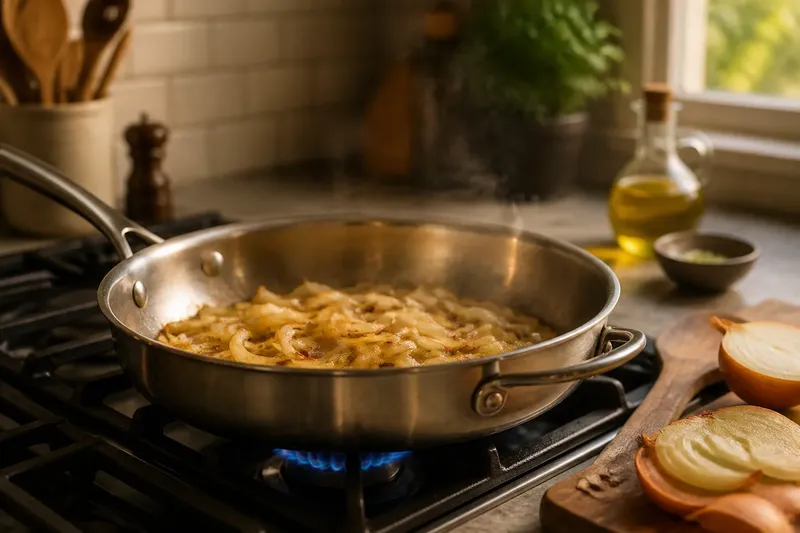
This is why a pan of mushrooms can first look wet and pale, even though it is over heat. The mushrooms release moisture, and a crowded pan lets vapour linger around them. As the liquid evaporates, the sound and appearance change: bubbling gives way to a drier sizzle, and exposed surfaces can begin to colour.
Adding more heat is not always the best response. If the pan is crowded, moisture may keep collecting faster than it escapes; if a sauce is already present, higher heat may scorch it before the food browns evenly. A cook can instead work in smaller batches, allow liquid to evaporate, or choose a cooking method that suits a wetter preparation.
Creating room to brown
For pan cooking, dry the outside of ingredients with a clean kitchen towel when that suits the food, and leave enough room for steam to escape. A broad frying pan can be more useful than a narrow pot for ingredients that release moisture, because more surface is exposed. A baking tray likewise gives vegetables room to roast rather than sit in a pool of their juices.
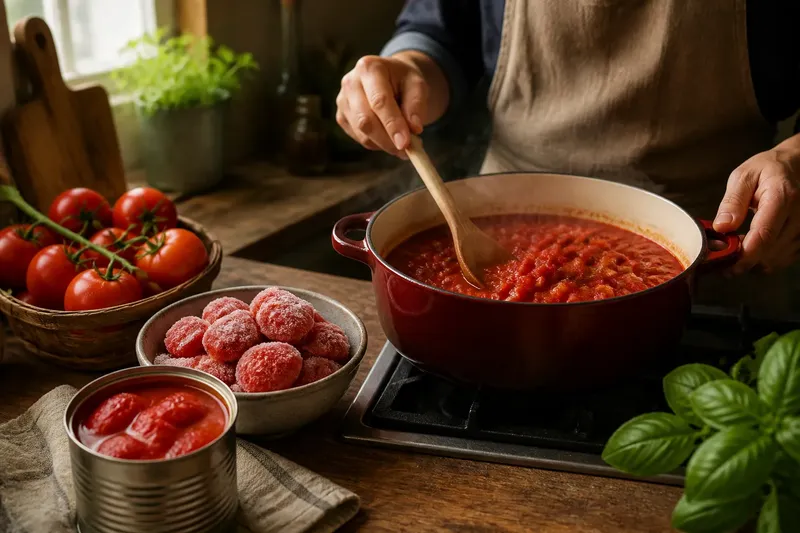
These are adjustments, not rules that every dish must follow. A stew is meant to cook in liquid, and a covered pot can be the right place for tenderising ingredients without seeking a browned crust. If a recipe calls for browning before adding stock or tomatoes, the pause to colour the food builds a layer of flavour that the later liquid will carry through the dish.
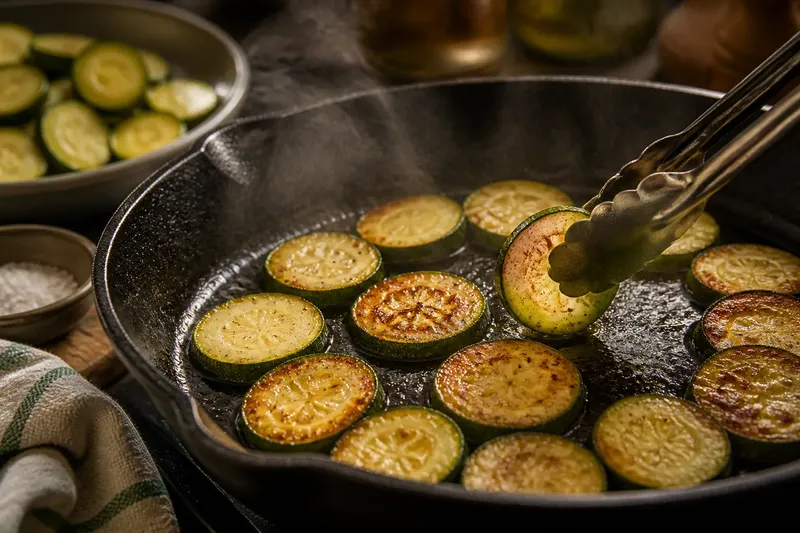
Imagine someone cooking sliced courgette in a small skillet. At first, the slices overlap and release liquid, so they soften while remaining pale. If the cook moves half to a plate and lets the rest sit in a single layer, the visible liquid can evaporate and the pan-contact sides may take on golden patches; the expected result is a more savoury, lightly firm edge, not a promise that every slice will colour identically.
Choosing the right degree
More browning is not always better. Gentle golden colour can suit onions, bread or a pancake, while darker colour may be welcome on a roast potato or a piece of meat. Beyond the desired point, a surface can taste bitter or burnt. Watch the food, listen for changes in the pan and respond to the aroma rather than leaving it unattended because a timer has not sounded.
Different cookware and heat sources alter how quickly a surface colours. A pan’s material and thickness affect how it transfers and retains heat; an oven’s position and airflow influence how evenly food dries. These factors are useful context, but the immediate signs remain practical: whether liquid is still present, whether the surface is in contact with heat, and whether its colour is moving towards the flavour you want.
Ingredients also vary. A food with more surface sugars may colour readily, while a wet coating can delay browning or darken before the food beneath has cooked. If a recipe depends on a particular result, follow its method and any relevant manufacturer guidance for cookware and appliances rather than treating one heat setting as universal.
Questions about browning?
Does browning seal in juices?
No. A browned crust can change the surface’s texture and flavour, but it does not form a watertight barrier. Juiciness depends on the ingredient and how it is cooked as a whole.
Why is my food steaming instead?
Surface water may still be evaporating, or the pan may hold more food and moisture than its heat and exposed area can manage. Give vapour room to escape or cook in batches when a browned surface is the aim.
Can food brown in the oven?
Yes. Roasting exposes surfaces to hot, relatively dry air, allowing moisture to evaporate and colour to develop. Spacing ingredients apart on a tray helps prevent them from sitting in released liquid.
Is browning the same as burning?
No. Browning is a useful transformation that adds colour and flavour; burning is excessive heating that produces unpleasant dark patches and bitter tastes. The boundary depends on the food, so use sight and smell as well as the recipe’s timing.
Reading the change
When you want browning, pay attention to what the surface is doing before changing the heat. A wet sheen, bubbling liquid or a cloud of steam signals that energy is still being spent on moisture. As the surface dries, the sound often becomes sharper and colour begins to appear where food touches the pan or tray.
That small shift explains why browning can seem quiet and gradual: first water leaves, then heat changes the exposed surface. Keep the search phrase browning in cooking in mind as a useful distinction, not a demand for colour in every dish. Some meals benefit from a toasted edge; others rely on softness, moisture and gentle cooking, with no browned crust needed.